Haiti once supplied 60% of the world's coffee. Today we import over a billion dollars in food. This has to stop.
In the 1780s, Saint-Domingue was the most productive agricultural economy in the world. Today, Haiti imports most of the food its people eat. The land has not changed. Our investment in it has.
Read aloud by your device's built-in voice.
A history most people have forgotten
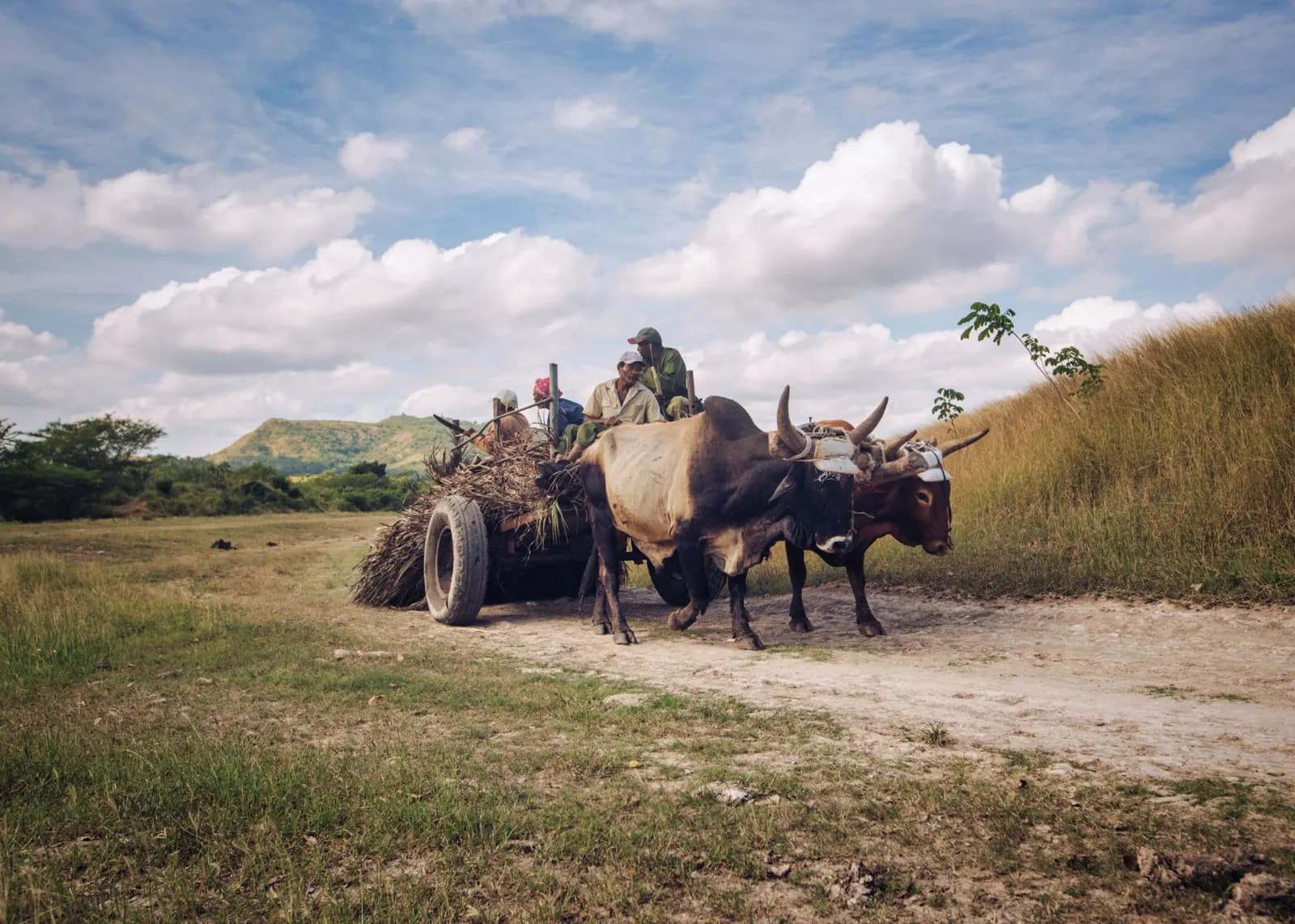
I want to begin with a fact that I believe every person of Haitian descent, and frankly every person interested in economic history, should know. In the 1780s, the French colony of Saint-Domingue, which we now call Haiti, produced roughly 60 percent of the world's coffee and 40 to 50 percent of Europe's sugar. It was the single most productive colony in the Atlantic world. France's wealthiest merchants built their fortunes on the output of that small Caribbean territory: historians estimate it accounted for a third or more of France's entire foreign trade. The cities of Bordeaux, Nantes and Marseille, and much of France's 18th-century prosperity, were built on labor extracted from that island.
This was not farming in the usual sense. It was an industrial-scale agricultural operation, built on the backs of 500,000 enslaved Africans, producing commodities that fed and fueled the European economy. The productivity was extraordinary. The human cost was unconscionable. And the legacy for Haiti has been devastating.
When Haiti won its independence in 1804, the large plantations were broken up. The freed population, rightfully, claimed the land. But the shift from plantations to small subsistence farms, together with the isolation of international trade embargoes, the debt France imposed in 1825, and the political instability that followed, meant that Haiti's agricultural output collapsed within decades. A country that once fed Europe now imports more than a billion dollars in food a year.
I work at Ecoknowme because I believe economic facts should drive economic decisions. And the facts of Haiti's agricultural collapse, and of its agricultural potential, demand a serious response.
The soil that once produced 60% of the world's coffee is still there. The rivers are still there. The farmers are still there. What is missing is the investment.
The agricultural crisis, by the numbers
Here is where Haiti stands today, using data from the Food and Agriculture Organization of the United Nations and the World Bank:
- of Haiti's land is arable, about 11,000 square kilometers
- 40%
- of Haiti's land is arable, about 11,000 square kilometers
- of the workforce is in agriculture, the largest sector
- 29%
- of the workforce is in agriculture, the largest sector
- spent on food imports every year
- $1B+
- spent on food imports every year
- of farmers use modern machinery
- <5%
- of farmers use modern machinery
- agriculture's share of GDP
- 20%
- agriculture's share of GDP
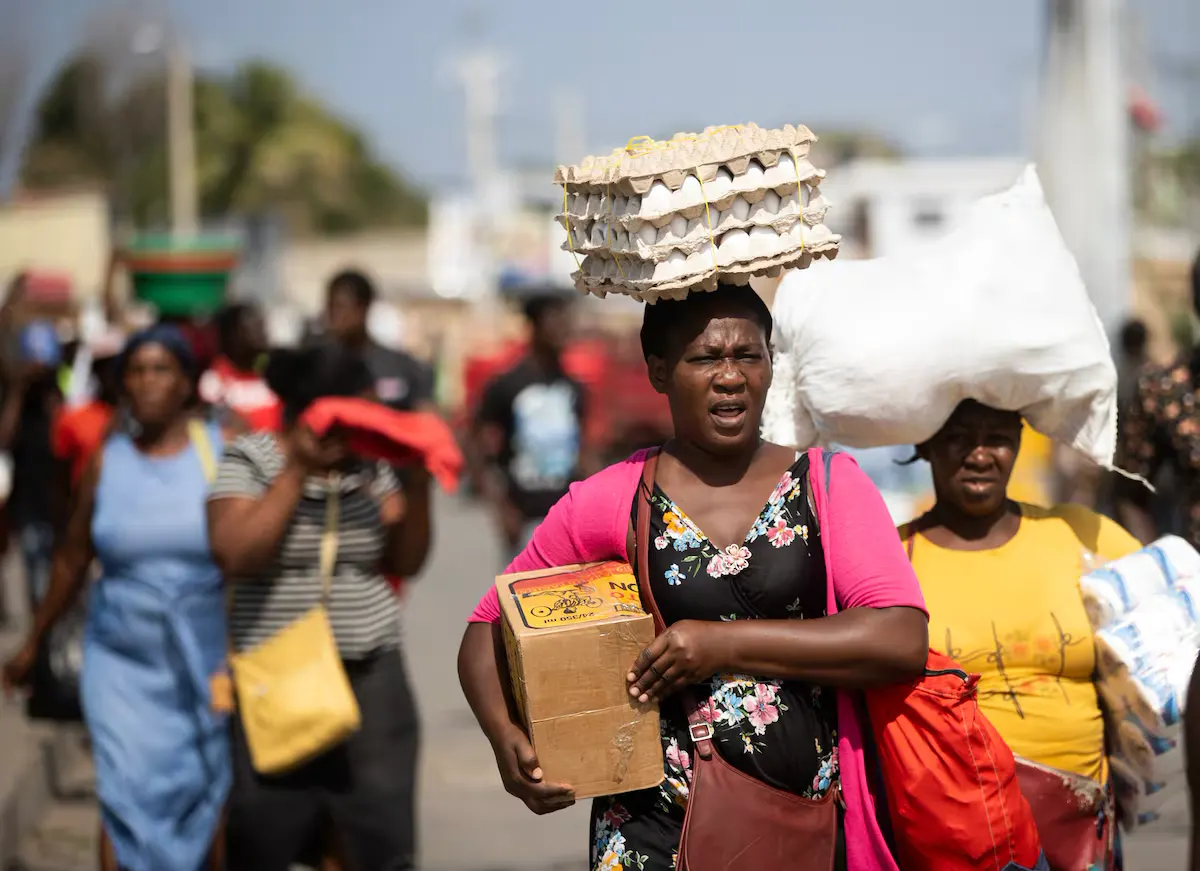
The arithmetic is striking. Haiti has the land, the workforce and the climate. And yet it spends over a billion dollars a year importing food: rice from the United States, chicken from Brazil, cooking oil from global commodity markets. Every dollar spent on imported food is a dollar that leaves the Haitian economy instead of circulating within it.
At Ecoknowme, one of the first things we teach clients is to see where their money goes before they redirect it toward building wealth. At the national level, Haiti's food import bill is one of the largest leaks in the economy. It is money that could be working at home, paying Haitian farmers, supporting Haitian food processors and building Haitian supply chains, that goes to foreign exporters instead.
The coffee story: from world leader to afterthought
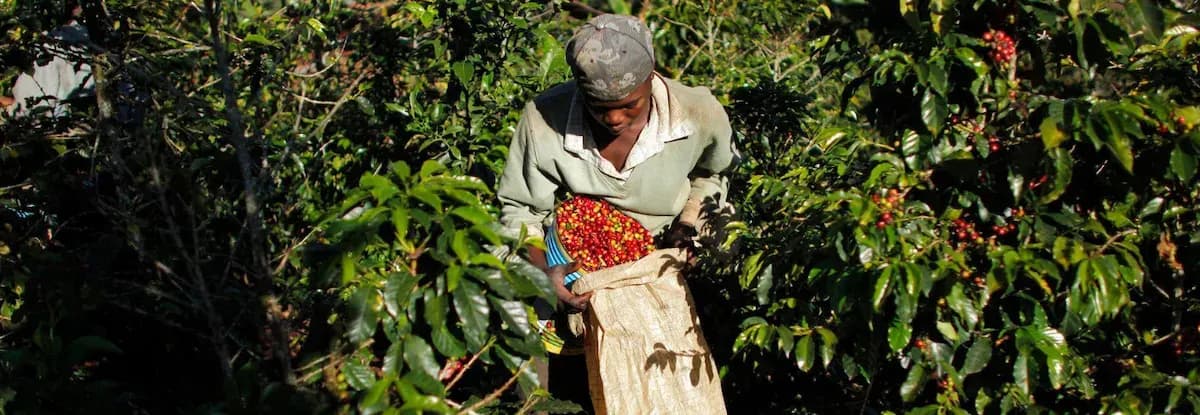
Coffee is Haiti's most instructive agricultural story, and its most compelling opportunity. Coffee was introduced to Saint-Domingue in 1734. By 1788, the island supplied about half of all the coffee consumed in the world. The Typica arabica grown in Haiti's mountains was, and remains, one of the finest in the world. High altitude, rich soil and traditional agroforestry methods produce a coffee with exceptional flavor that commands premium prices in specialty markets.
Today, Haiti's coffee exports are a fraction of what they were. Deforestation, soil erosion, a lack of investment in processing, and the absence of organized export supply chains have reduced Haitian coffee to a footnote in the global market. Yet the potential has not changed. The mountains are still there. Smallholder farmers still grow the arabica. The flavor that made Haitian coffee legendary is still there.
Starbucks sources coffee from more than 30 countries on three continents. Haiti is not a significant supplier. That is a market failure, not a product failure. With investment in processing, quality certification and export infrastructure, Haitian specialty coffee could reach premium markets that are actively looking for distinctive, single-origin products.
Haiti produces the world's best vetiver, an essential oil in Chanel No. 5. The world's most valuable fragrance ingredient grows here. Most Haitians have never heard of it.
The overlooked export: Haiti's vetiver advantage
There is one agricultural export Haiti already dominates, and almost no one talks about it. Haiti is the world's leading producer of vetiver essential oil, with an estimated 50 to 60 percent of global supply. Vetiver is a grass whose roots yield a rich, smoky essential oil that is a foundation of fine perfumery. It is in Chanel No. 5, in Gucci Bloom, and in dozens of the world's best-known fragrances. The global essential oil market is worth more than $10 billion a year and is growing.
Haiti holds that leading position not through modern investment, but through the persistence of smallholder farmers using traditional methods with little government support. Imagine what a coordinated, well-capitalized vetiver industry could do: organized cooperatives, modern distillation equipment, quality certification, and direct relationships with international fragrance houses. That is exactly the kind of opportunity Ecoknowme exists to spot: an existing asset that is underused because its owners lack the financial infrastructure, market knowledge and organized capital to get its full value.
What modern agriculture in Haiti could look like
In our $40 billion debate, I argued for a comprehensive modernization of agriculture. Here is what that investment should include:
- Machinery for 200,000 small farmers ($10 billion): Tractors, irrigation systems and harvest equipment for farming communities. Farming fragmented land with hand tools is not just inefficient; it cannot scale.
- A national network of farm cooperatives ($8 billion): Organize small farmers into cooperatives big enough to be commercially viable. One farmer cannot negotiate with Starbucks. A cooperative of thousands can.
- Premium coffee and cacao exports ($5 billion): Processing plants, certification to specialty coffee standards, and direct relationships with premium buyers. Haitian arabica can sell for $15 to $25 a pound in specialty markets, versus $1 to $2 as a commodity.
- Food processing at home ($8 billion): Stop exporting raw crops and start exporting finished products. Processing keeps more of the value inside the country.
- Agricultural technical education ($4 billion): Train a new generation of agronomists, soil scientists and agricultural entrepreneurs: 5,000 skilled technicians a year would transform the sector within a generation.
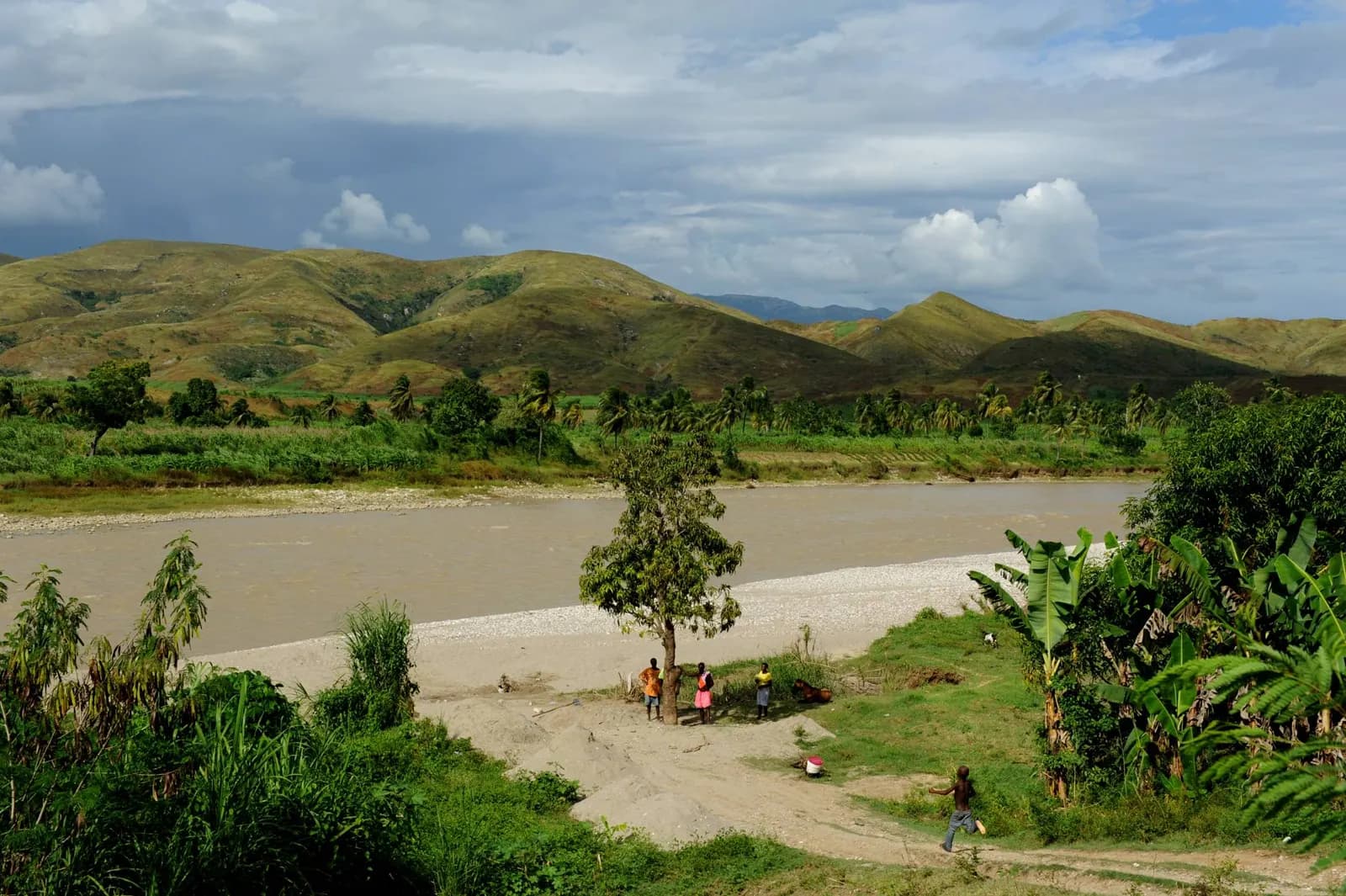
- Irrigation on the Artibonite Plain ($5 billion): The Artibonite River is Haiti's largest source of fresh water, and its plain is among the most fertile land in the Caribbean. Proper irrigation would unlock potential that is badly underused today.
The financial case for investing in agriculture
Let me put this in the financial terms we use with our clients every day. Haiti spends over a billion dollars a year importing food. That is cash going out: it creates no jobs at home, builds no local industry and generates no tax revenue. It is consumption spending, not investment spending.
A modern farm sector that cut food imports in half would keep over $500 million a year inside Haiti. That money circulates: it pays farmers, who spend at local markets, who employ local workers, who pay local taxes. In a developing economy, every dollar kept at home this way is commonly estimated to generate 1.5 to 2.5 dollars of activity. On the export side, the opportunity is even bigger: specialty coffee, vetiver, cacao, tropical fruit and processed foods could together reach $1.5 to $2 billion a year within fifteen years of sustained investment.
This is not nostalgia. It is putting assets to work. Haiti has the land, the climate, the workforce and the track record. What it lacks is capital, organization and market access. That is a solvable problem.
Food sovereignty is not just a political idea. It is a financial strategy. A country that grows its own food controls its own costs, its own supply chains and its own economic future.
My conviction
Every day at Ecoknowme, I sit across from clients, many of them Haitian immigrants, who work several jobs to send money home. According to the World Bank, Haitians abroad sent about $3 billion home in 2018, nearly a third of the country's GDP. That is a remarkable act of collective solidarity. It is also a sign of how completely Haiti's economy has failed to provide enough income for its own people.
Investing in agriculture would not solve everything. But it would fix one of the most basic failures in Haiti's economy: the land cannot feed the people who live on it, let alone earn export income. When farmers earn enough to stay on their land, they don't move to Port-au-Prince and add to the pressure on the city. When Haiti grows and processes its own food, the billion dollars spent on imports stays home. When Haitian coffee reaches Starbucks, Haitian farmers capture part of the premium the world is already paying.
Haiti fed the world once. The soil has not forgotten how. What it needs now is the investment to remind it: modern equipment, organized markets, trained people, and the financial infrastructure to turn harvests into lasting national wealth. That is the investment I would make, and I believe the data supports it completely.
Sources

Jonathan is a co-founder and the CEO of Ecoknowme. He holds a bachelor's in accounting and business administration and a master's in corporate finance.