Port-au-Prince is not Haiti. It's time to invest like it.
Nearly a third of Haiti's population lives in one metropolitan area. That is not development. It is a structural crisis, and it has a $40 billion solution.
Read aloud by your device's built-in voice.
A city that was never meant to carry this weight
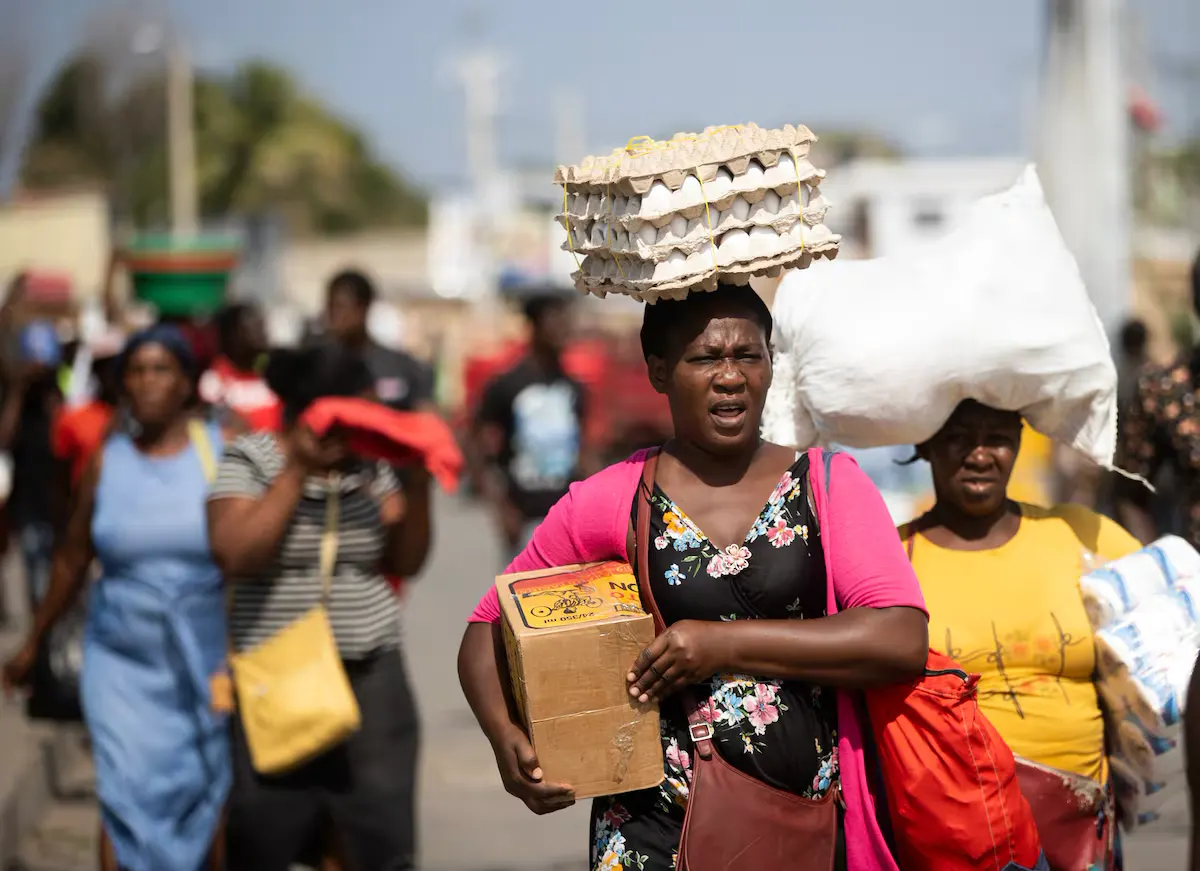
Let me put a number in front of you: 3.2 million. That is the estimated population of the Port-au-Prince metropolitan area today. Haiti's total population is about 12 million. That means one metropolitan area, in one coastal valley, is home to roughly 27 percent of the entire country. In a nation with ten departments, hundreds of communes, and thousands of kilometers of mountains, plains, river deltas and coastline, most public services, economic activity, health care, financial institutions and government functions are concentrated in a single place.
This is not how viable economies are built. This is how they collapse.
I am a co-founder of Ecoknowme, and part of our mission is helping immigrant communities understand how economic systems work, and where they fail. What Haiti has built in Port-au-Prince is not a capital city. It is a pressure point. And when one pressure point bears the weight of a whole nation, the risk is not that it bends. It is that it breaks.
Decentralization is not just a development strategy. It is a survival strategy for any nation serious about sustainable growth.
The numbers behind the imbalance
The data on Haiti's urbanization and infrastructure gaps tells a story that the political conversation rarely addresses honestly:
- of Haitians live in the Port-au-Prince metro area
- 27%
- of Haitians live in the Port-au-Prince metro area
- of Haitians now live in cities, up from 29% in 1990 (World Bank)
- 57%
- of Haitians now live in cities, up from 29% in 1990 (World Bank)
- projected urbanization by 2050
- 75%
- projected urbanization by 2050
- have access to electricity, mostly near the capital
- 39%
- have access to electricity, mostly near the capital
- use the internet, a divide that mirrors geography
- 35%
- use the internet, a divide that mirrors geography
The World Bank describes Haiti as one of the fastest-urbanizing countries in Latin America and the Caribbean, and that urbanization is almost entirely a Port-au-Prince phenomenon. The urban population doubled from three million to six million in about fifteen years, driven not by economic opportunity but by the collapse of rural economies, failed agricultural policies and the absence of public services outside the capital.
When people move to Port-au-Prince, they are not chasing prosperity. They are escaping the absence of services everywhere else. That is a fundamentally different kind of migration, and it creates a fundamentally different policy problem.
What decentralization actually means, financially
“Decentralization” comes up often in conversations about Haiti's future. I want to be specific about what it means in economic terms, because this is ultimately a financial argument. Every piece of public infrastructure that exists only in Port-au-Prince, whether a hospital, a school, a paved road, a government office or a bank, is value the nine other departments cannot reach. Haiti is not poor because it lacks resources. It is poor because the way its resources, services and economic activity are distributed is deeply inefficient.
Take Cap-Haïtien, Haiti's second-largest city and the economic and cultural center of the north. It is about 250 kilometers from Port-au-Prince, and the trip can take four to six hours depending on the roads and the season. The mountains between them have never been tunneled, bridged or bypassed by any serious infrastructure project. As a result, the north, with its fertile plains, deep natural harbor, the UNESCO World Heritage site of the Citadelle Laferrière and its unspoiled coastline, is effectively cut off from the national economy.
That is not a geography problem. It is an investment problem, and it has a price tag.
Cap-Haïtien could be Haiti's second economic engine. Today it takes up to six hours to reach it from Port-au-Prince. That is not a distance problem. It is a political choice.
Infrastructure as economic policy
At Ecoknowme, we teach clients that financial health is not just about what you earn; it is about how efficiently value flows through your life. The same is true for a nation. Infrastructure is the circulatory system of an economy. When it is blocked or missing in whole regions, those regions cannot take part in the economy, whatever resources they have.
The research is clear. The International Monetary Fund has found that in emerging economies, raising infrastructure investment by one percentage point of GDP is associated with a 1.5% increase in output after four years. The McKinsey Global Institute estimates that every dollar invested in infrastructure returns $1.50 to $2.00 in economic activity within a decade. For Haiti, the opportunity is even greater, because the starting point is so low. When 61 of Haiti's 140 communes have no paved road to the capital, the returns on connecting them are not marginal; they are transformative. New roads can connect markets that have been isolated for generations. Hospitals in underserved departments can take pressure off Port-au-Prince's overwhelmed health facilities.
What $40 billion in infrastructure could build
The $40 billion in our debate is the conservative estimate of what Haiti was made to pay, directly and in lost development, because of the reparation debt France imposed in 1825. If that money were returned and spent on infrastructure, here is what a responsible program could deliver:
- Mountain tunnels and highway corridors ($12 billion): Build tunnel routes through the central mountains, cutting the Port-au-Prince to Cap-Haïtien trip from six hours to under ninety minutes. This one investment would unlock the economic potential of the entire north.
- Regional hospitals in all ten departments ($8 billion): Build and fully equip ten advanced regional medical centers. Today, patients from the south travel to Port-au-Prince for specialized care, a journey that kills people who cannot afford the time or the cost.
- National road network ($10 billion): Pave and maintain 1,200 kilometers of new main roads connecting the 61 communes without reliable access to the capital. Farm markets, tourism and trade all depend on being connected.
- Airports in Cap-Haïtien and Jérémie ($6 billion): Turn regional airports into international hubs for tourism and cargo. Port-au-Prince cannot be Haiti's only door to the world.
- Regional public institutions ($4 billion): Banks, schools, business registration offices and government service centers in every region, so citizens no longer travel to Port-au-Prince for basic paperwork.
The cost of doing nothing
There is a financial argument for decentralization that often gets overlooked: the cost of the status quo. Every year that Port-au-Prince remains the only center of Haiti's economy, the country pays in ways that never appear on a balance sheet. Infrastructure in the capital wears out faster because it was never designed for three million people. Health systems collapse under demand that should be spread across the country. Farm output stays below its potential because farmers in the north and south cannot reach markets efficiently. Young people leave productive rural land because it offers no services, no connections and no future.
These are not hypothetical costs. They are the measurable result of fifty years of investment centered on the capital. The question is not whether Haiti can afford to decentralize. It is whether Haiti can keep affording not to.
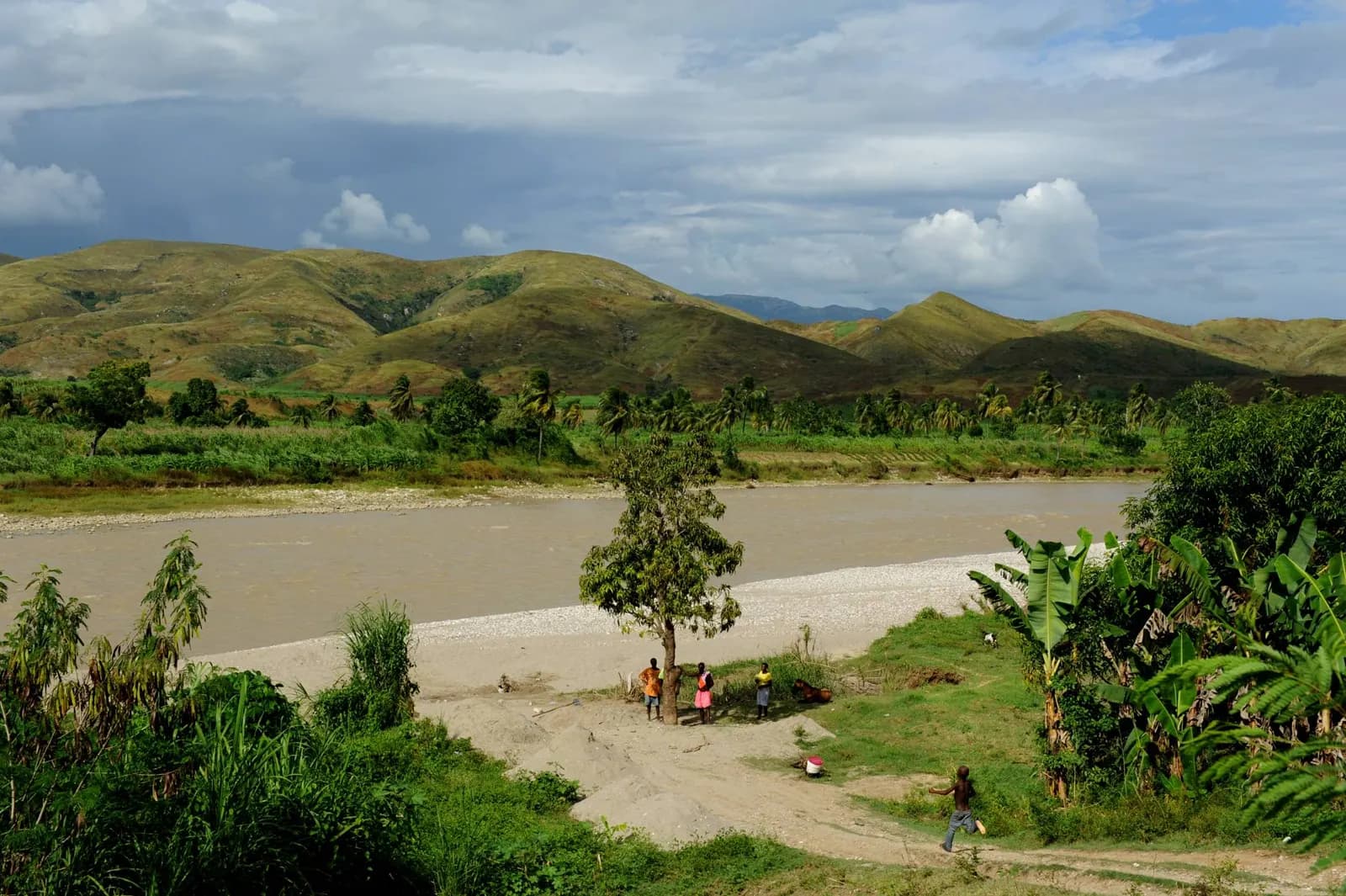
The north of Haiti has fertile plains, a deep-water harbor, UNESCO heritage sites and unspoiled coastline. What it lacks is roads, hospitals and a government that sees its potential.
My position
I work at Ecoknowme because I believe economic knowledge is the most powerful tool for people trying to build better lives in hard circumstances. That applies to nations too. Haiti does not need to be rebuilt in Port-au-Prince. It needs to be built, perhaps for the first time, in all ten of its departments at once: roads, power, hospitals, airports, connectivity, and a government present wherever its citizens live.
Infrastructure is not glamorous. It does not trend on social media. But every other investment depends on it. Fabrice's schools need roads so children can reach them. Jonathan's farms need roads to reach markets. Everything I am arguing for is the foundation for what the other co-founders of Ecoknowme are arguing for. Decentralization is not one strategy among many. It is the strategy that makes all the others possible.
Sources
- World Bank · Urban population (% of total), Haiti
- World Bank · Access to electricity (% of population), Haiti
- World Bank · Individuals using the Internet (% of population), Haiti
- World Bank · Haiti overview
- International Monetary Fund · World Economic Outlook, October 2014, chapter 3: Is it time for an infrastructure push?
- McKinsey Global Institute · Infrastructure productivity (2013)

Yvan is a co-founder and the Chief Strategy Officer of Ecoknowme. He holds a bachelor's in management and economics and a master's in international business.