Why host an international competition?
World Cups and Olympics can boost a country's economy and reputation, or leave it with debt and empty stadiums. What separates the two is planning.
Read aloud by your device's built-in voice.
Written in June 2025, before the 2026 World Cup.

Countries should host major sporting events to boost their economy and reputation. Doing so attracts tourists and investors, improves infrastructure, and showcases stability and expertise globally. Each country should plan spending based on its economic strength. For example, Russia spent $14–15 billion on the 2018 World Cup, a small part of its $1.7 trillion GDP. In contrast, Qatar, with a smaller economy, spent $180 billion, about 10% of its GDP. This shows how different countries manage their finances, with Russia already well-prepared thanks to its established football league and infrastructure.
Once the budget is set, the focus should be on infrastructure. Before bidding to host an event, countries should assess their transportation, sports facilities, and telecommunications. This prevents overspending and ensures lasting benefits for the community. Qatar is a good example, repurposing stadiums and investing $36 billion in its metro system. In contrast, Brazil's $550 million stadium is now a bus parking lot, and another $215 million stadium is used as a homeless shelter.

Navigating the challenges of hosting major sporting events
Organizing a World Cup takes more than just a big budget. Experience and expertise are important, but not enough on their own. Problems like a chaotic final and security lapses show that poor planning and overlooked details can lead to serious issues.
- Doubts: Experience and expertise are crucial for hosting major events. The U.S. seems prepared with its strong economy, stability, and large stadiums. It regularly hosts full sports events, so it was chosen for Copa América and the World Cup. However, problems during Copa América, like a chaotic final with ticketless fans, have cast doubt on the U.S.'s ability to host the World Cup.
- Challenges: With more nations and visitors expected, there's no room for mistakes. The Argentina–Colombia final failed due to poor planning. South American hosts use multiple security perimeters to prevent chaos from ticketless fans, which the U.S. should start considering.
- Shortcomings: Despite its experience, the U.S. was unprepared for the chaos at this game. Organizers missed security issues and were overwhelmed. They need better planning and expert help for the World Cup.
Since it's nearly impossible to be fully prepared, it's important for the host nation to consider its economic realities. Matching event expenses to the country's budget means that even if the event doesn't turn a profit, there will still be long-term benefits.
The evolution and impact
- viewers for the 2018 World Cup final, a record
- 1.12 billion
- viewers for the 2018 World Cup final, a record
- nations at the 2026 World Cup, up from 32
- 48
- nations at the 2026 World Cup, up from 32
Sporting events bring billions of people together every four years for major international tournaments like the World Cup, Copa América, EURO, and the Olympics. The World Cup, first held and won by Uruguay in 1930, remains a major challenge due to its vast infrastructure needs. It continues to grow in success, viewership, and participation, with a record 1.12 billion viewers for the 2018 final.
Similarly, the UEFA EURO, starting in 1960, is Europe's premier football tournament, known for its intense competition and expanding viewership. The Copa América, the oldest continental tournament since 1916, highlights South America's football heritage with top teams from the continent. The Olympics, a global event held every four years since 1896, showcase a wide range of sports and foster international unity. All these tournaments have evolved significantly, reflecting their enduring appeal and growing global interest.
In 2026, the World Cup will be hosted by three countries for the first time, with 48 teams participating. This new format will spread the logistical and financial responsibilities across multiple nations. This paper explores the rationale behind a country's decision to host a World Cup, examining the necessary preparations, the levels of readiness and the potential impacts of such an event.
- 16 · Europe (UEFA)
- 9 · Africa (CAF)
- 8 · Asia (AFC)
- 6 · South America (CONMEBOL)
- 3 · North and Central America (CONCACAF)
- 3 · Host nations (U.S., Mexico, Canada)
- 2 · Intercontinental play-off
- 1 · Oceania (OFC)
Bid submission criteria for the World Cup
Hosting a World Cup involves complex logistical, financial, and infrastructure challenges. The process to secure approval for hosting is detailed and demanding, requiring careful planning, significant investment, and coordination across many areas. To select a World Cup host, FIFA first announces the bidding process, including steps and deadlines. Some confederations may be excluded, like UEFA and AFC were for the 2026 bid.
The Bid Evaluation Task Force then reviews the bids, checking requirements, infrastructure, and risks. Finally, the FIFA Congress votes on the host nation, with the decision for 2026 made on June 13, 2018, where all 211 members voted to choose the host.
The Bid Evaluation Task Force looks at infrastructure and commercial aspects. Organizing a World Cup depends heavily on infrastructure, including stadiums, team and referee facilities, accommodation, transportation, and fan event locations. Bidders don't need to have all the stadiums and infrastructure ready when they apply; these costs can be included in their budget. Infrastructure is important, but commercial factors like expected revenue from media rights, ticket sales, and organizing costs also influence the decision, making up about 30% of the consideration.
- Infrastructure
- 70%
- Infrastructure
- Commercial
- 30%
- Commercial
| Area | What it means |
|---|---|
| Stadiums | At least 12 stadiums: 40,000 seats for early games, 60,000 for quarter-finals and semi-finals, and about 80,000 for the opening match and the final. |
| Hospitality | 8 to 12 major cities with stadiums, hotels and transport, connected by airports handling international flights and around 1,450 passengers per hour. |
| Ticket sales | The North American bid used regular attendance in each host city to forecast $1.8 to $2.1 billion in ticket sales, potentially a record. |
| Cost | The U.S., Mexico and Canada used existing stadiums that met FIFA's requirements, avoiding the cost of building new ones. |
The pitfalls of hosting major sporting events
Hosting a major sporting event is a source of pride and can boost a country's image, but it doesn't always lead to economic growth. Poor planning can turn expected benefits into economic burdens, with low returns on investment and underused infrastructure.
Brazil hosted the 2014 FIFA World Cup and the 2016 Olympics with hopes of boosting tourism and revenue. While there was a short-term increase in visitors, it quickly dropped due to reports of political instability, economic issues, and safety concerns. Investments in stadiums and transport strained public finances without providing the expected long-term benefits.
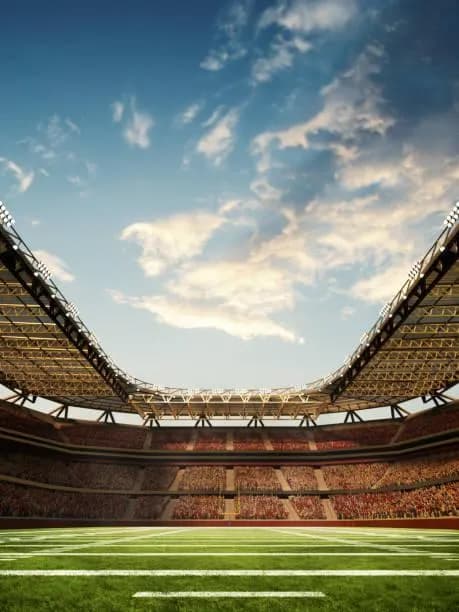
The 1976 Montreal Olympics show how costly hosting major events can be. The city underestimated expenses, leading to costs that were 720% over budget and leaving it in debt for years. Poor planning, overambitious stadium designs, labor strikes, and allegations of corruption all contributed to this financial disaster.
Countries should think carefully before bidding to host major events, especially if they are already in debt. After the events, underused facilities can become costly burdens rather than community assets. The Rio Olympic Park from 2016 and the Athens Olympic Sports Complex from 2004 are mostly abandoned and costly to maintain. South Africa's Mbombela and Peter Mokaba stadiums from the 2010 World Cup see little use but incur high upkeep costs. Montreal's Olympic Stadium also remains a financial burden due to low use and high maintenance. These examples show that expensive construction and poor planning can lead to long-term financial problems.
While some major sporting events have caused financial issues, hosting them can still be beneficial. The 1984 Los Angeles Olympics were successful due to private funding and existing facilities. Although Brazil's 2014 World Cup and 2016 Olympics didn't bring significant financial gains, they were memorable and exciting for fans.
Advantages of hosting
Hosting a sporting event is not an easy task. From the initial bid to the requirements for approval and preparation, the workload is intense, and there are multiple signs that hosting is an overall losing game in the short term. It is still worth highlighting the positive effects in the long run. The metrics we focus on are infrastructure improvement, tourism, and foreign direct investment.
Foreign direct investment, or FDI, shows how much other nations have invested in a given nation's economy. It implies that the receiving economy is secure and productive enough to attract foreign investors. We theorize that FDI improves after a successful event, as it testifies to excellent oversight by the planning parties and government.
Using data from the World Bank, we observe that FDI increased after the events held over the last two decades, which is particularly impressive given the global recession in that period. FDI increased for three consecutive World Cup hosts. In 2006, Germany's FDI grew 31% more than the previous year, and 29% in the year after the event. After 2010, South Africa saw a steady recovery in foreign investment.
Economic benefits
While hosting sports events doesn't significantly impact overall unemployment, it can create seasonal and contract jobs that help disadvantaged individuals. For instance, the 2012 London Olympics led to over 100,000 jobs being created and sustained, and the 2016 Rio Olympics provided loans and aid to small businesses. This supports the basic economic principle that consumer spending drives production, which is fueled by employment.
Hosting big sports events can also improve a nation's sports reputation. After the 1994 World Cup in the U.S., soccer grew, leading to the creation of Major League Soccer (MLS). The 2026 World Cup could do the same for North American soccer by increasing interest and talent. Since hosting the 2002 World Cup, Asia's soccer strength has grown, with twice as many Asian teams at the 2022 World Cup as in 2002. Germany won the 2014 World Cup and Brazil the 2016 Olympic football title shortly after hosting.

Executive summary
Hosting major sporting events like the FIFA World Cup or the Olympics comes with both big rewards and risks. These events require significant investments in stadiums, transportation, and accommodations, which can put pressure on public finances if not well managed.
On the positive side, successful hosting can lead to increased foreign direct investment, which signals global confidence in the host nation's economy. The influx of tourists and media attention can boost the local economy, creating jobs and generating revenue. The enhanced global reputation that comes from successfully hosting a major event can also lead to long-term benefits, such as increased tourism and stronger international relationships.
However, these potential benefits are far from guaranteed. Brazil's experience after the 2014 World Cup and the 2016 Olympics shows how poor planning and execution can turn anticipated benefits into burdens. Underused infrastructure can become a costly legacy if there is no plan for its use after the event. In contrast, the 1984 Los Angeles Olympics are often cited as a model of a profitable event, thanks to private funding and existing infrastructure.
The key to success lies in strategic planning, effective management, and making sure the infrastructure and investments made for the event keep benefiting the country long after it is over.
Sources
- University of Michigan Journal of Economics · The finances behind the 2022 World Cup
- NPR · Brazil's World Cup legacy includes $550M stadium-turned-parking lot (2015)
- FIFA · More than half the world watched record-breaking 2018 World Cup
- FIFA · 2026 bid evaluation report
- FIFA · 2026 bidding registration and requirements
- Tourism Management · tourism after Brazil's mega-events
- ASCE Journal of Performance of Constructed Facilities · Montreal Olympic Stadium
- IOC · Economic benefits of hosting the Olympic Games
- World Bank · foreign direct investment, net inflows

Analiz is written by the Ecoknowme team: tax, finance and economics, explained for Haitian, Francophone and immigrant families in three languages.