Rice and the road to Haiti's food independence
Haiti imports nearly half the food its people eat, including most of its rice. Why growing more rice at home could be one of the simplest steps toward economic development.
Read aloud by your device's built-in voice.
First published in July 2020. Prices and figures are from that time.
More than 200 years after proclaiming its independence, Haiti still faces economic dependence, mostly because of the imbalance between the goods it imports and the goods it exports. Haiti imports around 45 to 48% of the food its citizens consume each year. Strikingly, rice alone accounts for 7% of those imported food products, even though Haiti is known as an agricultural country (Open Data / InvestHaiti). This article shows how much rice Haitians consume, how meaningful rice production could be for the country's economic development, and how easily the changes that favor rice production could be put in place.
A country that runs on rice
- of rice eaten per person each year
- 115 lbs
- of rice eaten per person each year
- of rice imported each year from Arkansas
- 500,000 t
- of rice imported each year from Arkansas
- spent on those imports
- $226M
- spent on those imports
According to USA Rice, Haiti has a population of around 11 million, rice makes up 90% of its food products, and the average person eats 115 lbs of rice a year. Each year, Haiti imports around 500,000 metric tons of rice from Arkansas at $452 per metric ton, which comes to $226,000,000. Meanwhile, Mexico imports 892,000 metric tons for only $316 per metric ton.
As a result, a 55 lb bag of rice now costs $23 in Haiti. That is out of reach for a population where 55% of people earn less than $2.41 a day and another 23% barely earn $1.23 a day (Banque Nationale de Crédit).
The Artibonite Valley
Beyond the economic situation of the majority, almost half of the labor force cannot read or write, which leads to a lack of skills: Haiti is not yet ready for industrial development. One positive aspect is that 40% of the population already earns a living from small-scale agriculture. But they practice subsistence farming: farmers grow food, usually on their own land, just to meet their families' needs.
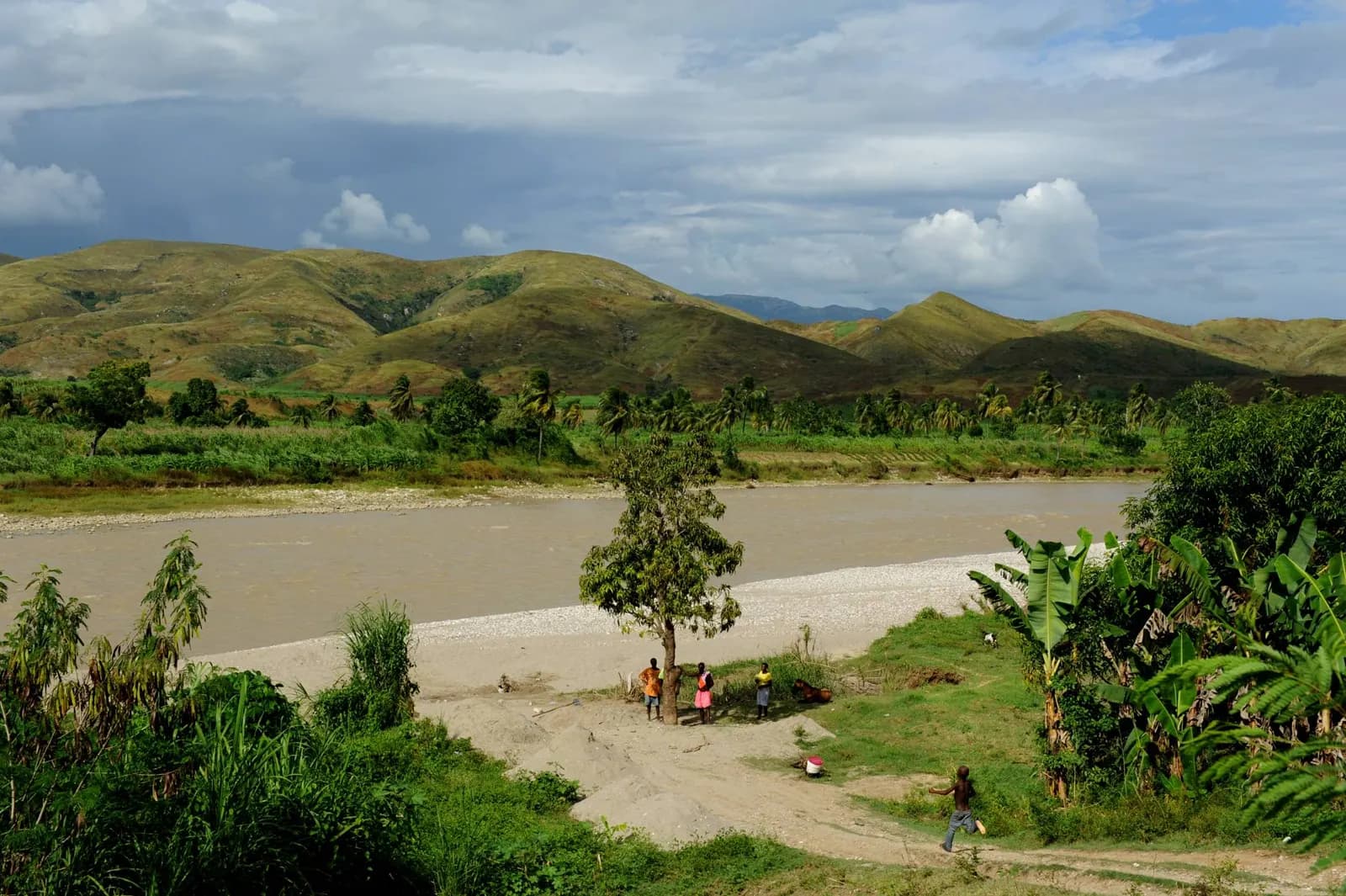
This is where the Artibonite Valley comes in. As the largest rice-growing area in the country, it has about 75,000 acres of irrigated land, where roughly 16 metric tons of rice per hectare can be harvested a year, saving the government around $240,000,000. Unfortunately, the area suffers from technical obstacles, along with a government strategy that does not favor agricultural development. The most frequent obstacles are outdated farming methods, the availability of water, and plowing services.
Haiti is known as an agricultural country, yet rice alone is 7% of the food it imports.
What the government can do
Government support is a key factor in any country's economic development, but the Haitian government is missing in areas that are fundamental to growing agricultural production.
- Funding: Only 5 to 7% of the government's annual budget goes to the Ministry of Agriculture. That is not enough to cover basic needs, or to give farmers access to special credit and insurance (HaitiLibre).
- Recognition: The government does not recognize farming as an actual profession, which discourages citizens from taking it up (MSPP).
- Tariffs: Raise customs tariffs on certain imported goods such as rice, within World Trade Organization and CARICOM rules, to protect national production, while lowering them on plowing equipment.
All things considered, the government must find a solution that reduces imported goods while strengthening national production. That solution is to make the most of the country's agriculture, because it is the best fit for both its economic system and its labor force.
Sources
- Banque Nationale de Crédit (BNC)
- PopulationData.net · Haïti, fiche pays (2020)
- HaitiLibre · Overview of budget allocations 2016–2017
- USA Rice · Market information
- InvestHaiti open data · National accounts (IHSI)
- Ministère de la Santé Publique et de la Population · Référentiel des emplois et des compétences

Analiz is written by the Ecoknowme team: tax, finance and economics, explained for Haitian, Francophone and immigrant families in three languages.